Last week was one hell of a roller coaster. I’d like to keep up with my goal of at least 1 blog post a week. It’s been a major struggle with the two new jobs, but as a magician told me this weekend (yes, you heard that right), you have to do what you love. It took him 3 years of practicing his craft and is finally doing what he loves. I met him this past weekend at a non-profit gala I helped volunteer for, he made a valid point — you can always have your day job but should always at least have your side art, your passion projects. And that’s exactly why I continue to push forward with my writing.
During Social Media Week, I successfully made it through 7 events and produced my first (sold out) event with DigitalDUMBO. As a promise to myself I wanted to make a recap of all the events and panels I attended. Thanks for bearing through this novel, but I promise there’s a ton of great takeaways.
———————————————————————————————————————————————————–
Tuesday, February 19, 2013:
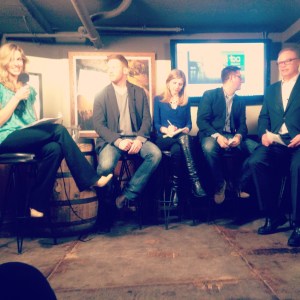
6:00-8:00pm: Doing It Live: The Integration of Social in Live Events
#SMWDoingItLive
Bridget Carey – Senior Editor @CNet – @BridgetCarey
Ben Hindman – Co-founder and CEO @SplashThat – @bjamin32
David Adler – Founder and CEO @BizBash_News – @DavidAdlerLinkedIn
Shawn Busteed – SVP, Business Strategy @TBAGlobal – @Busteed
Lauren Drell – Campaigns Editor @Mashable – @drelly
– Always follow-up after an event. Don’t do a post-event survey, instead try a photo gallery, they have higher traffic rates.
– With Live events – Twitter can be a simple way to outline what happened when you’re writing a story, especially useful for journalists and writers.
– Make it easy on attendees. Provide a list of the speakers, twitter handles, and hashtags.
– The decor is the event. Make sure your brand is on everything and do it in a unique way.
– Think of creative ways to thank attendees.
– A great way to influence people to tweet is to make them look awesome at an event or give them something awesome to photograph or share. Don’t make tweeting forced.
———————————————————————————————————————————————————–
Wednesday, February 20, 2013:
9:30am-10:30am: A Conversation with Neil Blumenthal, Co-Founder and Co-CEO, Warby Parker
#SWMHQ
– Businesses can create good in the world.
– One of the reasons why people leave their jobs isn’t because of compensation, it’s because they stopped learning.
– [Warby Parker] always trying to merge the physical and the digital. Connecting people on an emotional level.
Examples of this innovation:
– Always asks themselves the following questions:
- Is this a unique experience?
- Is this authentic?
- Does it have a compelling narrative?
- Does it do good in the world?
- Are we consistently learning?
– If you want to build relationships you need to let people in and be vulnerable.
– Give people a reason to share and they will.
———————————————————————————————————————————————————–
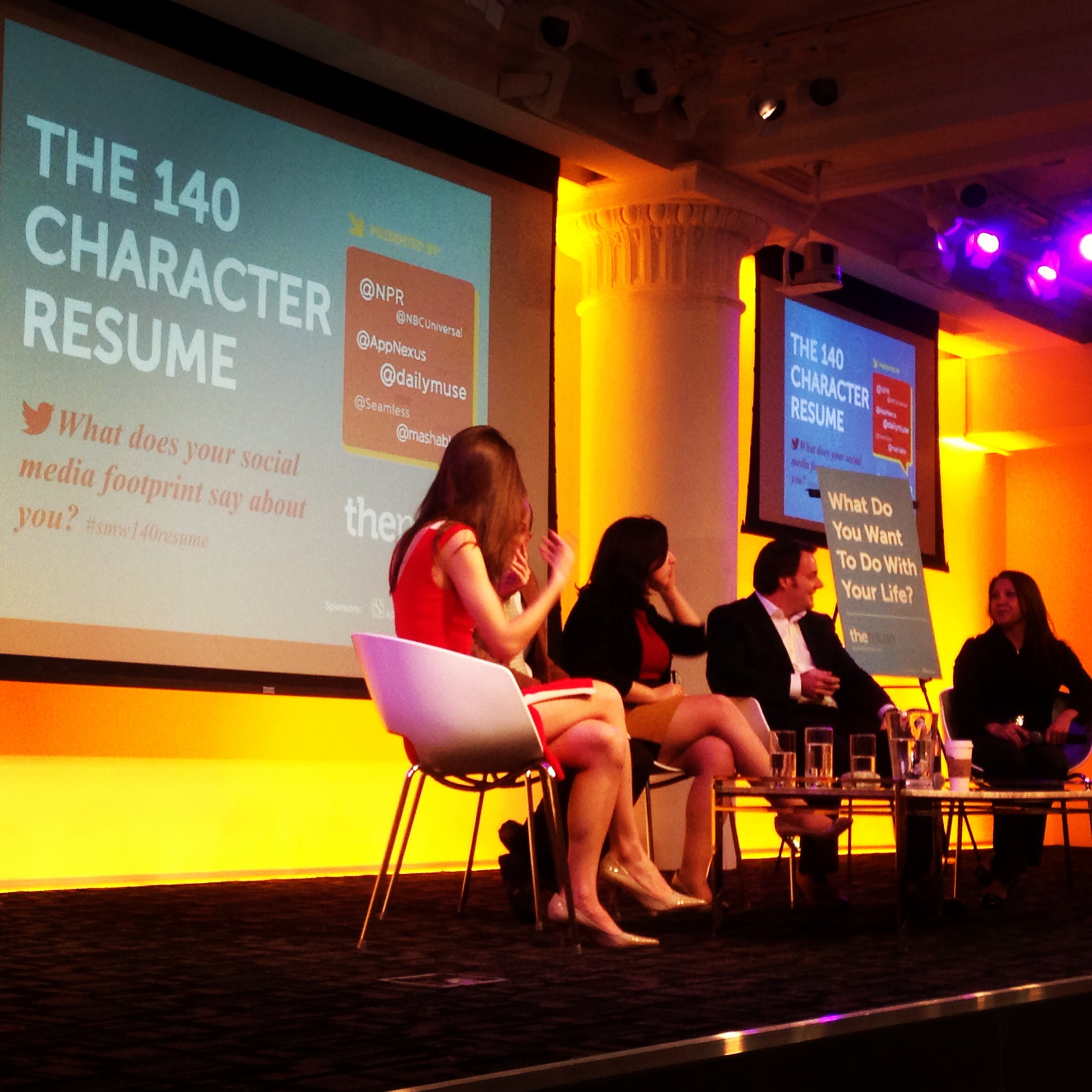
6:00- 7:30pm: The 140 Character Resume: How Your Social Media Footprint Can Get You Hired.
#SMW140Resume
Lars Schmidt, Head of Talent Acquisition and Innovation @NPR – @ThisisLars
Sharon Feder, COO @Mashable – @Sharonfeder
Brooke Camp, Talent Acquisition Leader New and Digital @NBC Universal – @BCeenByMe
Kathryn Minshew, Founder and CEO @DailyMuse – @kmin
Hagos Mehreteab, Director of Talent Acquisition at AppNexus @AppNexus – @gosnew

– Have an online presence and tailor it to your personality.
– Build your own projects. Create content and blogs.
– Consistency in your online profiles is important. Before you even start, scrub your online identity. Be professionally attractive & approachable.
– With every single message you send, you’re making an impression. Up to you if it’s good or bad.
– One big mistake is to ask for something from people you follow before you build a relationship with them.
———————————————————————————————————————————————————–
Thursday, February 21, 2013:
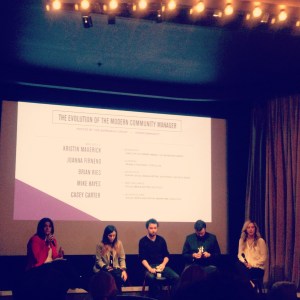
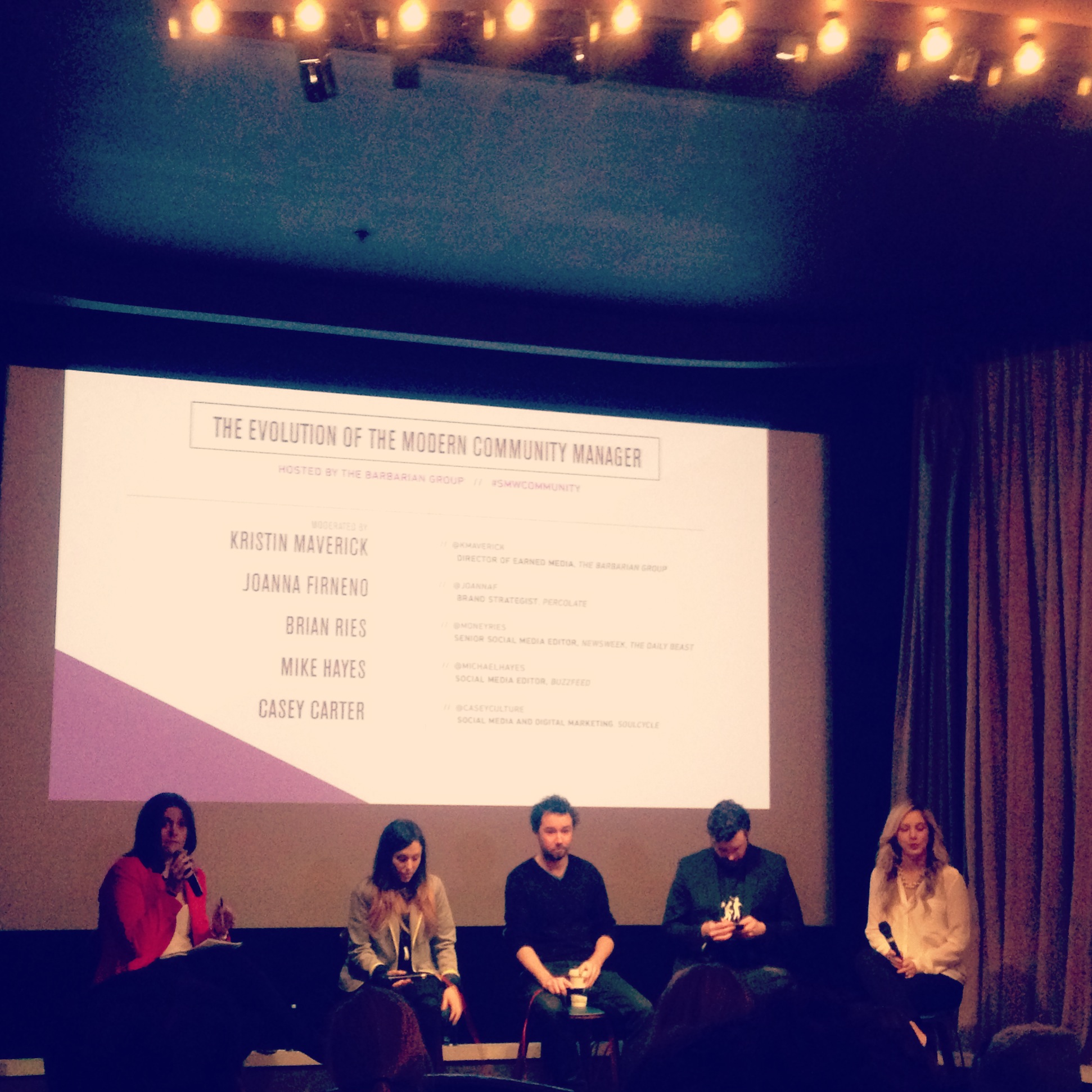
9:30am-11:00am: The Evolution of the Modern Community Manager
#SMWCommunity
Casey Carter- Social Media and Digital Marketing Manager @SoulCycle –@caseyculture
Kristin Maverick – Director, Earned Media @BarbarianGroup – @kmarerick
Joanna Firneno – Brand Strategist at @Percolate – @joannaf
Brian Ries – Senior Social Media Editor at @Newsweek and @DailyBeast – @moneyries
Mike Hayes – Social Media Editor @Buzzfeed – @michaelhayes
– The old way community management was done, included relying on content calendars. You’d develop the calendar and put it out. But with working on a hockey brand (Brian Ries) we noticed that the conversation escalated during game time which meant after 6pm — after working hours. There was a lack of real-time.
– You need to be flexible when real-time event happen. With Breaking News Buzzfeed comments within the first 15 minutes to elevate the conversation. People think if you’re not tweeting and commenting that much, then you’re not really there.
– How can brands work/change real-time. – Create a foundation on your brand and voice. Example: Oreo has a style guide. Like Oreo and the Super Bowl. It has to have that perfect formula. It blended the Blackout Meme with America’s love for Super Bowl Ads. They did something similar during the Grammy’s and it didn’t have the same effect because people don’t care as much about ads during the Grammys.
– When jumping on new platforms (Vine, Rebelmouse). First contact these companies, seeing if you can secure a domain and then set up a coffee meeting and see what the best approaches are for your brand. Secure your social presence.
– Social is just another piece of the business pie.
———————————————————————————————————————————————————–
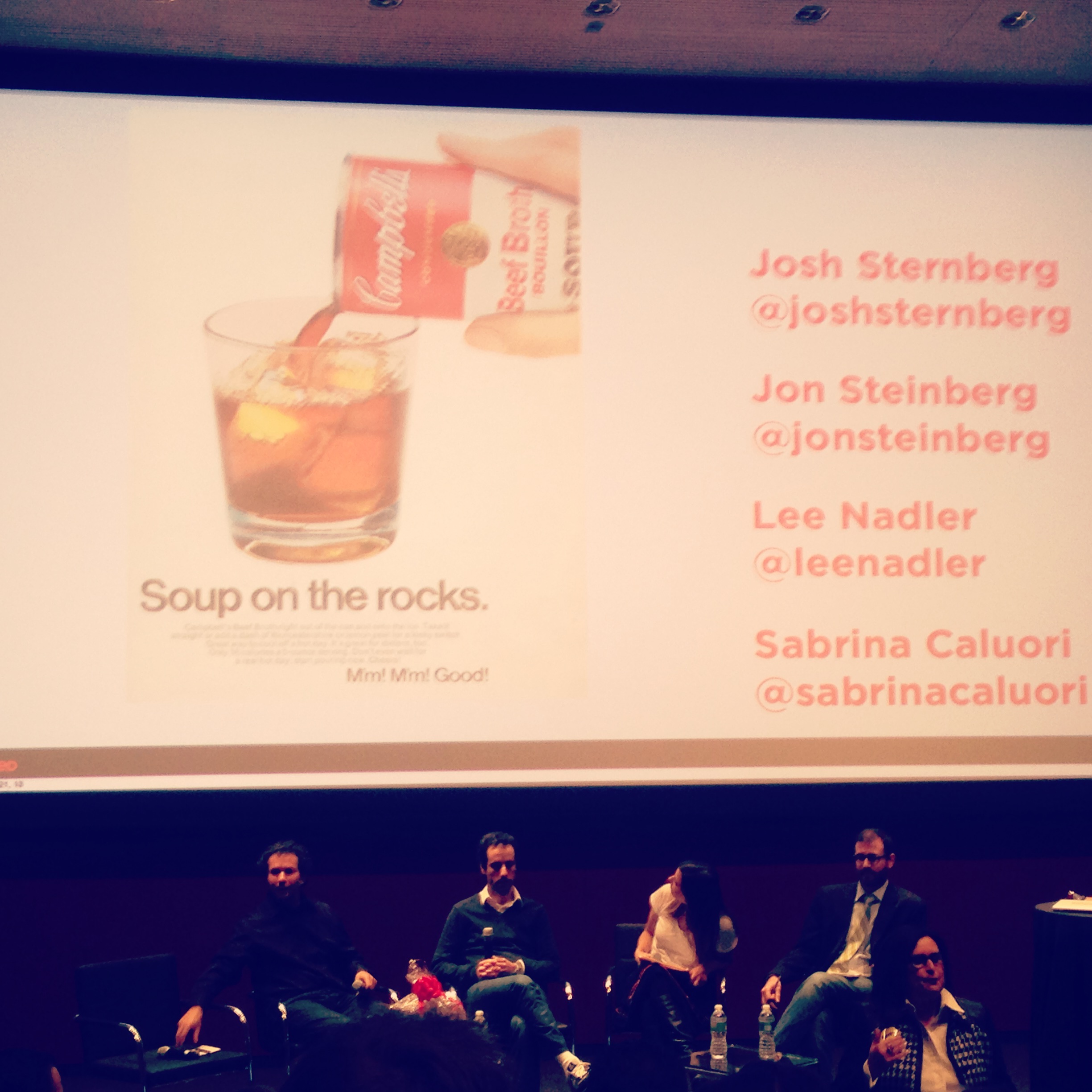
12:00pm-1:30pm: The Golden Age of Digital Storytelling
#SMWBuzzfeed
Josh Sternberg – Media & Publishing Reporter at Digiday- @joshsternberg
Jon Steinberg – President and COO at Buzzfeed – @jonsteinberg
Lee Nadler – Marketing Communications Manager at MINI USA- @leenadler
Sabrina Caluori – Vice President, Social Media and Performance Marketing at HBO & Cinemax- @sabrinacaluori
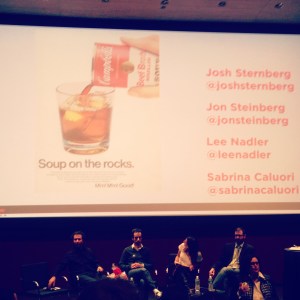
– Connect the world through conversations. Example when HBO did a Mistakes Girls Make hashtag and content, this happened alongside the conversations of New Years Resolutions.
– You can’t do anything good without actually working on it.
– We’re moving away from interrupted experiences (homepage take overs) into more custom emotional experiences. Example: Mini’s End of the World Campaign.
– When jumping on new platforms (Vine, Rebelmouse. ect.). Workshop with it, gather your team up and first understand: What’s my personal experience with this?
– Humanize and connect with users in real life. Try not to automate everything. Don’t be sales-y, understand the point of view of what makes this product or TV show awesome and be authentic.
———————————————————————————————————————————————————–
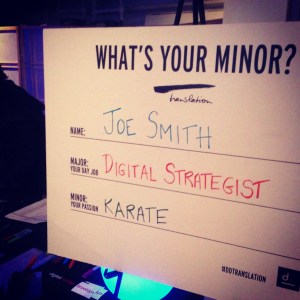
6:30pm – 9:00pm: dd:SOCIAL SMW – “Majors and Minors” Presented by Digital DUMBO & Translation
Recap of photos from running my first DigitalDUMBO Event.


———————————————————————————————————————————————————–
Friday February 22, 2013:
2:30pm-4:00pm – The Future of Branded Experiences
#SMWMKG
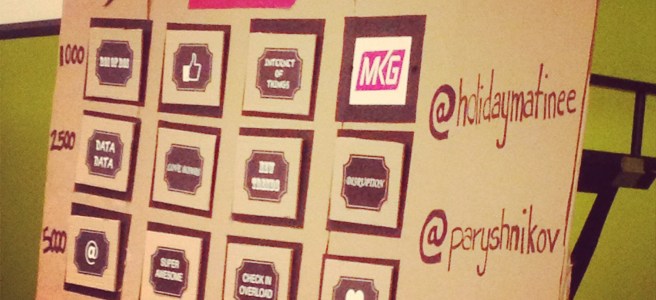
Nick Parish – Editorial Director, Americas at Contagious – @paryshnikov
Dave Brown – Director, Digital Strategy at MKG – @holidaymatinee
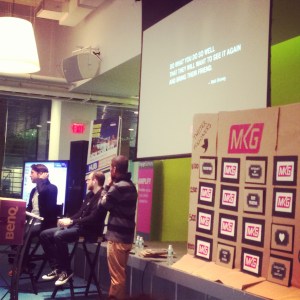
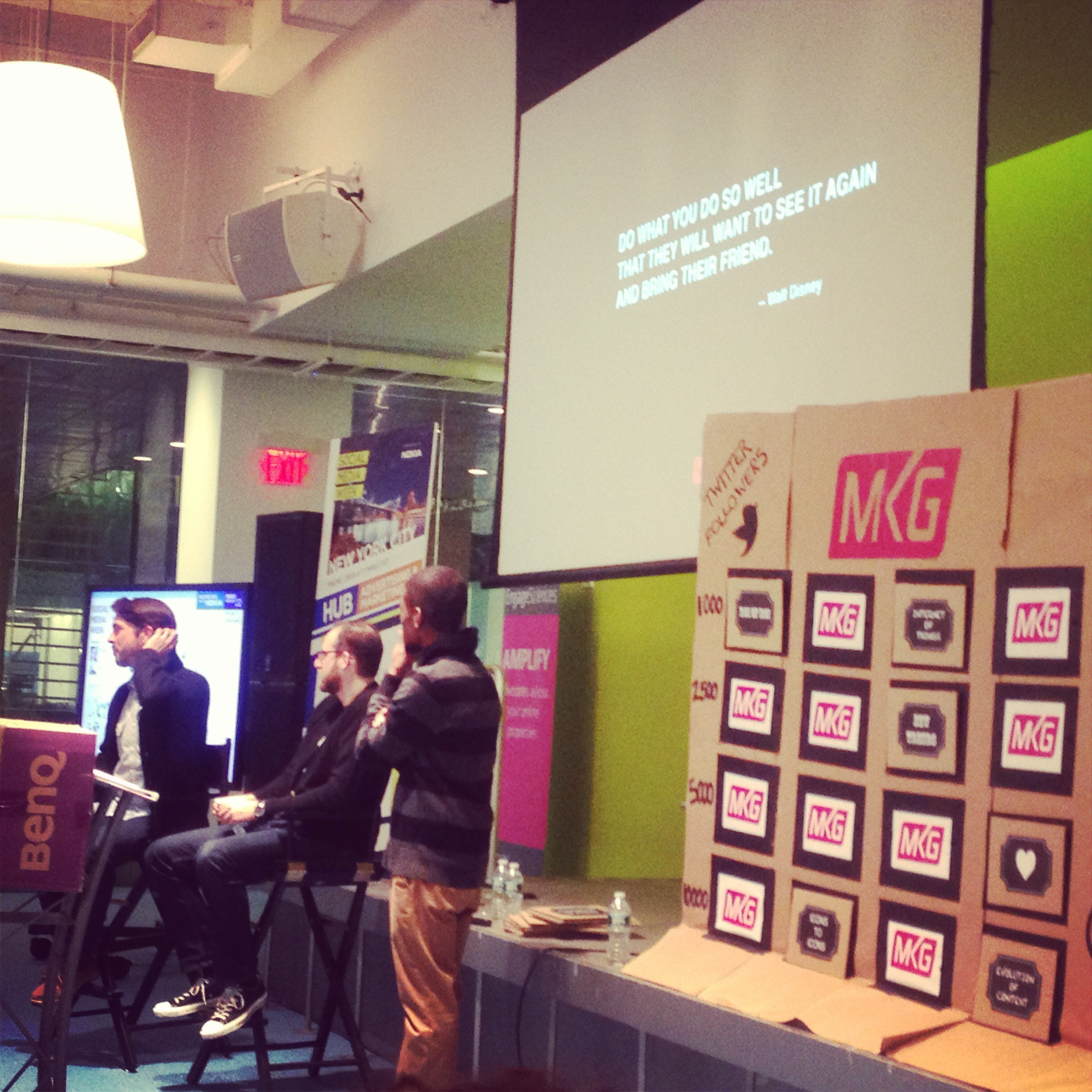
The best part of this panel was that it involved a DIY Jeopardy board. Leave to Dave to make magic among the digital and physical space. The “host” read off an audience member’s Twitter handle and they got to choose from each category on the board. The two panelists Dave Brown and Nick Parish would give their answers. Everyone was a winner. And it all started with this quote:
Do what you do so well that they will want to see it again and bring their friends. – Walt Disney
Final Takeaways:
– You don’t need to buy your voice in the world.
– The biggest danger brands can do not being interesting enough.
– Data can be used to make smarter decisions about events by using online data to help make offline decisions.
– Marketplace Disruption – – Airbnb is changing the hotel industry and challenging how hotel’s need to rethink their business models. Plated and Blue Apron is changing the food industry. Changing how Whole Foods and Trader Joe’s will rethink their models. Who Gives a Crap is changing the way we think about sanitation and the fundamental need for paper goods. Skillshare reminds us we’re all teachers.
– Brands need to be more human, have a conversation. Empower your Community Manager! Everyone needs to be integrated. Sit around the same table. Brands need to start talking with us and stop talking at us.
– People are consuming the content we write in unthinkable ways. Make content consumption a comfortable and seamless user experience – personal for anytime, anywhere, and on any device.
– We’re creating products that provide meaning to people’s lives in frictionless ways. ( Wemo, Twine, Goodnight Lamp.)
– Let’s make a human connection.
———————————————————————————————————————————————————–








 Nicole Monahan